
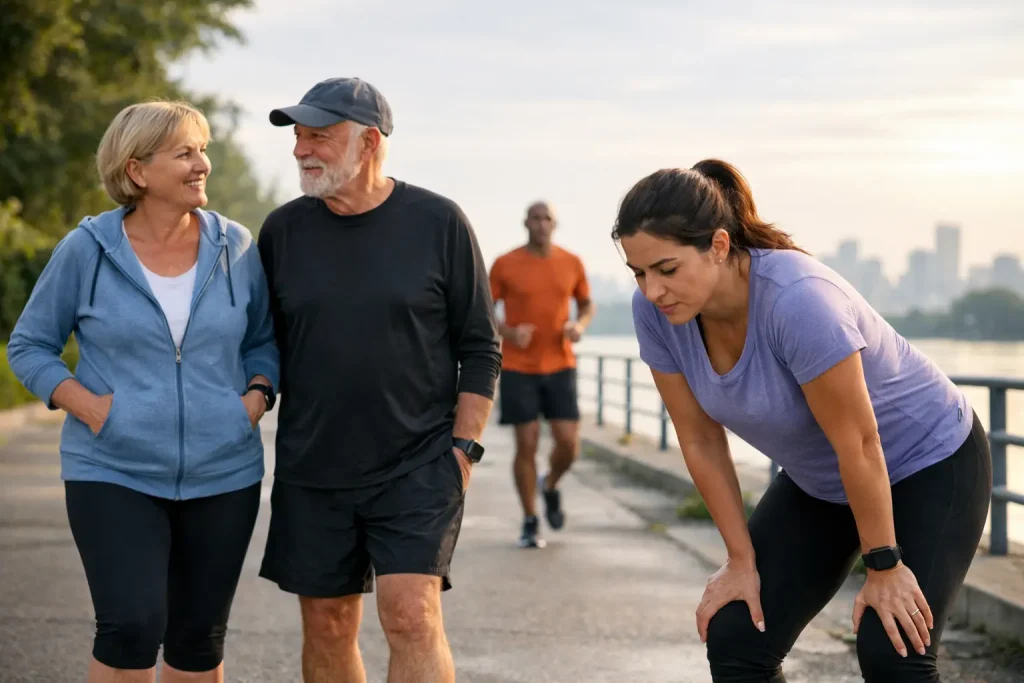
A short walk that leaves you more tired than expected can be a real shock. If you’re returning to running after illness, that gap between what you hoped you could do and what your body is ready for can feel frustrating, even a bit upsetting. That does not mean you’ve gone backwards forever. It usually means your body is still recovering, and it needs a gentler return than your mind expected.
This is one of those times where patience is not giving up. It is part of the process. Illness can take more out of you than a missed week or two of exercise. Even after the main symptoms have gone, your energy, breathing, sleep and confidence can all feel a bit off. That is why coming back slowly is not being overly cautious. It is often the safest and most effective way to get back into a steady rhythm.
Why returning to running after illness can feel harder than expected
Many people expect to feel “back to normal” as soon as the illness has passed. Then they try an easy jog and realise their legs feel heavy, their breathing feels awkward, or they are wiped out for the rest of the day. That can be discouraging, especially if you were building momentum before you got sick.
Illness can affect more than fitness. It can interrupt sleep, appetite, hydration, routine and confidence. If you had a virus, chest infection or even a rough few days of fever and fatigue, your body may still be working hard behind the scenes. For some people, the physical recovery is fairly quick. For others, energy returns in uneven patches. It depends on the illness, your general health, how long you were unwell and how much rest you needed.
There is also the emotional side. A lot of returning runners worry that they are starting from scratch. Usually, that is not true. You may need to reduce your effort and expectations for a while, but previous experience still matters. You already know how to begin, how to keep going when things feel awkward, and how to adjust. That counts for a lot.
When not to rush back
If you still have a fever, chest pain, significant shortness of breath, dizziness, body aches that feel more than normal post-illness fatigue, or symptoms that are getting worse rather than better, running can wait. The same goes if your sleep is poor, your resting energy is very low, or a normal daily task still feels harder than usual.
A useful check is this: if a brisk walk feels too much, a run is probably too much as well. Walking is not a lesser option here. It is a very honest way to see what your body can currently handle.
If you have had anything more serious, ongoing symptoms, or concerns about your recovery, getting medical advice before you return is the sensible move. That is not being dramatic. It is looking after yourself.
Start with what your body can do today
The easiest mistake is trying to restart where you left off. If you were comfortably running 20 or 30 minutes before illness, it is tempting to aim for that straight away. But your body may need a few smaller steps first.
A better approach is to begin below what you think you can do. That might mean a 10 to 15 minute walk. It might mean short walk-run intervals, such as one minute of easy jogging followed by two minutes of walking. It might even mean staying with walking only for a few outings if energy is still unpredictable.
This is where a walking-first mindset helps. You do not need to prove that you are really back by running continuously. A return that feels almost too easy is often the one that lets you build momentum again without setbacks.
A gentle way to rebuild running after illness
For many people, the most useful place to start is with time, not distance. Distance can make you push to finish a route even when your body is saying enough. Time is more flexible.
Try thinking in short sessions across the week rather than one big comeback run. Two or three sessions of 15 to 20 minutes can be much kinder than a single longer effort. Keep the running pace easy enough that you could speak in short sentences. If that is not possible, slow down or return to walking.
Week one might be mostly walking
That is completely fine. You could do three outings of 15 to 20 minutes and keep them as walks, or add a few brief jogs if you feel good. The goal is not to test your limit. The goal is to finish feeling like you could have done a little more.
Week two might introduce more run-walk
If week one feels steady, you might move to something like one to two minutes of easy running with two minutes of walking, repeated a few times. Keep it light. If you feel flat, repeat the previous week instead.
Progress is allowed to be uneven
Some people feel better quickly, then have one tired day out of nowhere. That does not mean the plan has failed. It usually means recovery is still happening. Repeat a week, shorten a session, or swap a run for a walk. That is sensible, not lazy.
This is why walking-first methods can work so well for beginners and returners. They leave room for real life and real energy levels.
Pay attention to the day after, not just the session itself
One of the clearest signs that you are doing too much is not always how you feel during the run. It is how you feel later that day or the next morning.
If a short session leaves you unusually exhausted, foggy, sore in a worrying way, or needing much more recovery than expected, that is worth noticing. The same applies if your symptoms return or your sleep gets worse. A manageable session should feel like something your body can recover from without a dramatic cost.
This is especially important if illness affected your lungs, energy levels or overall strength. Sometimes people can get through the session itself but then feel flattened afterwards. That is your cue to scale back.
Confidence often returns after the body does
Even when you are physically ready for easy running again, you might still feel hesitant. That makes sense. Illness can shake your trust in your body. You might wonder if every heavy breath means something is wrong, or if every tired run means you are failing.
Try not to judge your comeback by one outing. Early runs after illness often feel awkward. Your rhythm can take time to return. Instead of asking, “Was that a good run?” it can help to ask, “Was that manageable?” and “Do I feel okay afterwards?”
Those questions are kinder and more useful. They shift the focus from performance to recovery, which is what matters right now.
What counts as progress when you’re coming back
Progress might be running for 30 seconds without your breathing feeling tight. It might be finishing a walk-run session with a bit of energy left. It might be getting out the door twice this week after doing nothing for ten days.
This stage is not about impressive numbers. It is about rebuilding trust, routine and tolerance. The small wins are not fake wins. They are the foundation.
When you are juggling work, family, fatigue and all the normal interruptions of life, a sustainable return matters more than a dramatic one. Missing a session does not ruin anything. Swapping a run for a walk still supports the habit. Taking another easy week if your body asks for it is part of training, not a detour from it.
A simple rule for returning to running after illness
If you are unsure what to do, use this rule: do less than you think you should, and wait to see how your body responds.
That may sound almost too simple, but it prevents a lot of setbacks. It also removes the pressure to get it exactly right. You do not need the perfect comeback plan. You need a calm, adjustable starting point.
If today all you can manage is a ten minute walk, that counts. If you can add a few easy jogs between walking, that counts too. If you need to repeat the same short session several times before progressing, that is normal. In the Runners Gateway community, this kind of return is not seen as a poor substitute for real running. It is real running for real life.
Start where you are, let walking do some of the work, and give your body the chance to surprise you gently rather than punish you for being human.
If you want a simple place to restart, the Start Running Again guide can help you choose a first step, and this month’s Challenge gives you somewhere to count it.