
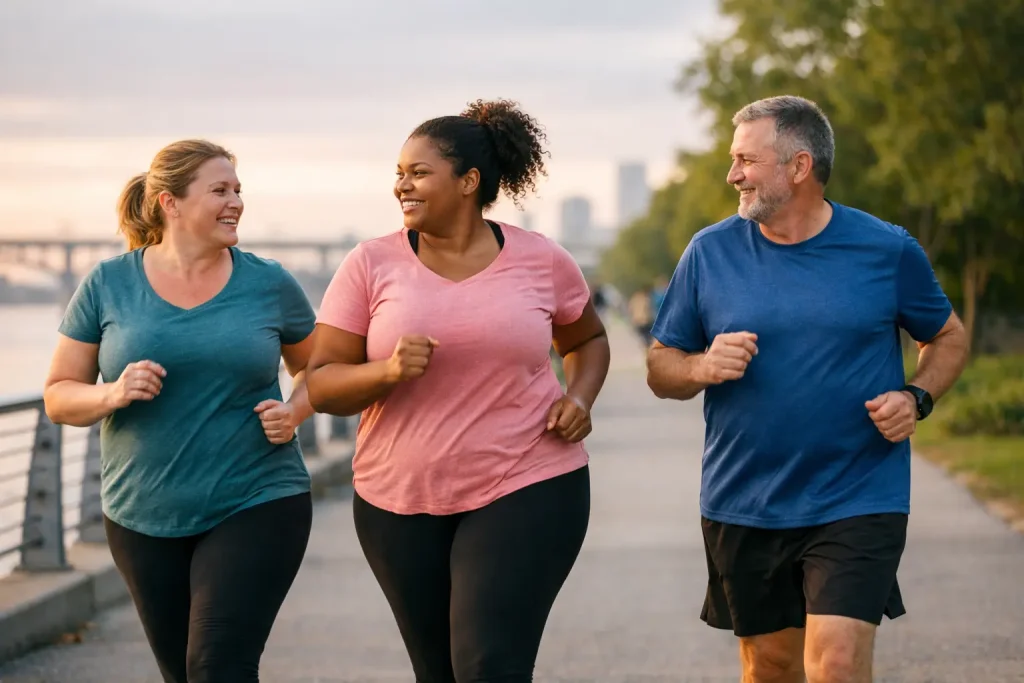
Getting back into running can feel different when your body feels different. If you have been looking for a guide to running after weight gain, there is a good chance you are not just thinking about fitness. You may also be carrying frustration, hesitation, or a quiet worry that running will now feel harder, slower, or somehow not for you anymore.
That feeling is common, and it does not mean you have missed your chance. Weight gain can change how running feels, but it does not remove your right to begin again. It simply means your starting point has changed, and your approach needs to match where you are now rather than where you used to be.
Why running feels harder after weight gain
The first thing many people notice is impact. Joints can feel more loaded, breathing may feel harder sooner, and even a short jog can seem surprisingly tiring. That can be discouraging, especially if you are comparing yourself with an earlier version of you.
But this is not a sign that you have failed or that running is off the table. It usually means your body needs a steadier re-entry. More body weight can mean more force through the feet, knees and hips, especially if you try to run continuously too soon. If you have also had a long break from exercise, your muscles, tendons and general aerobic fitness may need time to catch up as well.
That is why a walking-first approach works so well here. It lowers the load, gives your body time to adapt, and helps you build confidence without turning every session into a test.
A guide to running after weight gain starts with less
A lot of people try to restart by proving something to themselves. They head out, run until it feels awful, and come home thinking they are too unfit. The problem is not them. It is the method.
If you are returning after weight gain, start with what feels almost too easy. A brisk walk is a valid first session. So is a walk with 20 to 30 seconds of light jogging added every few minutes. The goal is not to see how much you can tolerate. The goal is to finish feeling like you could do it again.
This matters because consistency grows from manageable sessions, not heroic ones. When a session leaves you sore, embarrassed or wiped out for two days, it becomes harder to return. When it feels gentle and doable, your brain starts to believe this can fit into real life.
For many adults, especially if energy is low or confidence has taken a hit, this is the turning point. You do not need to earn running by getting fitter first. You can build fitness through walking and walk-run sessions right now.
How to begin without battering your body
Start with three sessions a week if that feels realistic. Two is also enough. Leave a rest day or an easier day between them. In the beginning, your body is adapting not just to exercise, but to repeated impact.
A simple starting point might be a 20-minute outing made up mostly of walking, with a few short jogs mixed in. For example, walk for four minutes and jog gently for 30 seconds, repeating that pattern a few times. If that feels like too much, shorten the jog. If it feels fine, stay there for a couple of weeks before changing anything.
The best pace is one that feels deliberately slow. If you cannot speak in short sentences, it is probably too hard for now. There is no prize for making early sessions tougher than they need to be.
It also helps to choose softer, flatter routes when you can. A smooth path at the local park is often kinder than cambered roads or steep hills. Hills are not bad, but they increase effort and load, so they can wait until your body feels more settled.
What to expect in the first few weeks
The early stage can be awkward. Breathing may settle before your legs do, or your legs may feel fine while your confidence wobbles. Some days will feel encouraging and others strangely heavy. That does not mean the plan is not working.
When you are running after weight gain, progress is rarely neat. Sleep, stress, hormones, weather, work and general life all affect how movement feels. A session that felt manageable last week might feel harder this week. Try not to turn that into a verdict on yourself.
Instead, look for quieter signs of progress. You recover faster. The walk breaks feel more comfortable. You dread sessions less. You finish with a little more in the tank. These signs matter because they show that your body is adapting, even if your pace is not changing.
Protecting your joints without becoming fearful
A sensible guide to running after weight gain should say this clearly: some discomfort is normal, but sharp pain is not something to push through. Mild muscle soreness, puffing and general stiffness can be part of starting again. Pain that changes your stride, worsens as you go, or lingers for days deserves attention.
This is where patience helps more than toughness. Repeat weeks when you need to. Keep the run portions short. If your knees or feet feel grumbly, reduce the jogging and keep the walking. That is not giving up. That is training in a way your body can absorb.
Supportive shoes can help, but they do not need to be fancy. The main thing is that they feel comfortable and stable. If you have an old pair that is flattened out or makes your feet ache, replacing them may make a noticeable difference.
Some people also benefit from a few minutes of simple strength work on non-running days, especially for calves, glutes and hips. It does not need to be a full gym routine. A handful of bodyweight movements at home can support your return, but if that feels like too much to add right now, walking is still a strong foundation.
The mental side of starting again in a changed body
For many people, the hardest part is not the physical effort. It is being seen. It is worrying about pace, body size, red faces, walk breaks, or whether you still count as a runner.
If this is you, try to make the first step smaller. Go out at a quieter time. Choose a route where you feel less exposed. Remind yourself that most people are not judging your intervals or your pace. And if you need to walk, walk. Walking does not cancel out the session. It is part of the session.
It can also help to stop using your past self as the benchmark. That version of you had a different body, different circumstances and different recent history. The job now is not to get back there as fast as possible. The job is to build a version of running that works for your life and body as they are now.
That is often more sustainable anyway. Plenty of people in the Runners Gateway community have found that once they stop chasing what they used to do, they become more consistent than they were before.
A realistic way to measure progress
If you only track success by how long you can run without stopping, you may miss the progress that keeps you going. A better question is whether running is becoming more doable in your actual life.
Maybe progress means you got out twice this week despite feeling flat. Maybe it means your walk-run session felt steadier. Maybe it means you stopped dreading the first five minutes. These are not small things. They are the foundations of a habit.
If you want a loose structure, stay with each level until it feels comfortable rather than rushing forward on the calendar. The Runners Gateway Pathway is there for that kind of gradual build: steady enough to follow, flexible enough for real bodies, real schedules, and real interruptions.
What to do today
If you have been overthinking this, make today very simple. Put on comfortable clothes, head outside, and walk for 10 to 15 minutes. If you feel good, add one or two short jogs of 20 to 30 seconds. Then stop while it still feels manageable.
That may not look dramatic, but it is enough to begin. And beginning gently is often what makes continuing possible.
Your body may have changed, but that does not place running out of reach. It just asks for a kinder start, a slower build, and the willingness to let walking count while you find your rhythm again.